Our e-commerce team lost its primary verification tool when SMS-Activate shut down. Two months of platform-hopping and $85 in test deposits later – here is what held up and what didn’t.
Running an e-commerce operation in 2026 means creating accounts constantly. New marketplace accounts for international expansion. Fresh social media profiles for brand launches. Supplier platform registrations. Payment gateway verifications. Every single one of them wants a phone number, and none of them should be getting a personal cell.
For the past two years, our go-to tool for handling all of this was SMS-Activate. It was the kind of service that just worked – cheap numbers from any country, instant codes, reliable API. Nobody on the team thought about it much. It was like a utility.
Then it shut down in December 2025. No migration path, no warning for users who were not plugged into the Telegram channel. Just a farewell page.
Finding the best SMS activate alternatives became an urgent operational problem, not a casual “let’s explore the market” exercise. We needed something working within days, and we needed it to handle at least 30-40 activations per week across multiple countries.
Here is what actually happened when we tested the options.
How We Tested
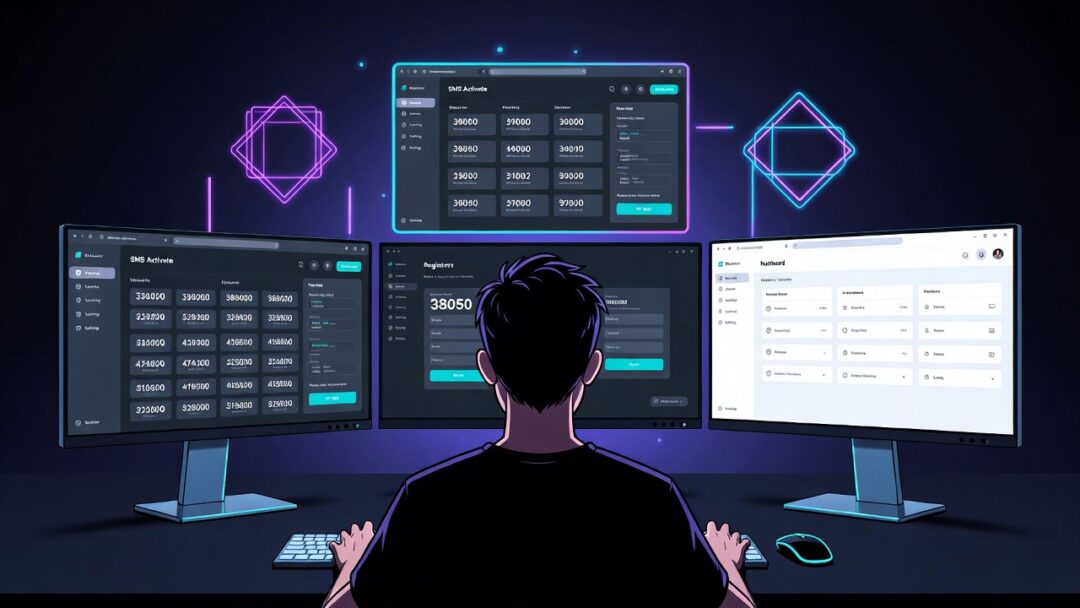
Rather than rely on marketing claims, we ran every platform through the same practical workload over a two-month stretch (January-February 2026). The criteria were simple:
- Register on each service and deposit $10-15.
- Run at least 10 activations per platform across a mix of popular services (Google, Instagram, WhatsApp, Telegram, Amazon) and countries (US, India, Indonesia, UK, Brazil, Turkey).
- Track three things: price paid, time to receive the code, and whether the number was accepted by the target platform (no recycled-number rejections).
- Note anything that slowed down the workflow – clunky UI, stock issues, failed deliveries.
Total spend across all platforms: approximately $85. Total activations attempted: 73 (successful and failed combined).
The Results
Here is where each platform landed, ordered by how likely we are to keep using it.
HeroSMS – The One That Stuck
Site: hero-sms.com
This was not the first platform we tested, but it ended up being the last one we needed.
The backstory matters. When SMS-Activate shut down, their farewell page included a Q&A section. One question asked where to buy numbers going forward. The answer named HeroSMS specifically, saying the SMS-Activate team had provided their technologies to HeroSMS. On a separate question about whether a new SMS-Activate exists, the answer was even more direct – any service using the SMS-Activate name is a scam.
So HeroSMS is not just “an alternative.” It is the platform that inherited the actual technical infrastructure – the provider networks, the delivery systems, the API architecture. That lineage shows up in practice.
What we tested: 18 activations across Google ($0.02), Instagram ($0.015), WhatsApp ($0.15), Telegram ($0.13), Amazon ($0.03), and Facebook ($0.02). Countries: US, India, Indonesia, Turkey, Brazil, UK.
Results: 18 out of 18 delivered. Zero recycled-number rejections. Average code delivery time around 20 seconds. The fastest was a Google activation from a US number in 8 seconds. The slowest was WhatsApp from Brazil at roughly 2 minutes.
What stood out:
The interface mirrors the old SMS-Activate workflow – pick a service, pick a country, see the price, buy, receive. Anyone who used the original platform will navigate it blind.
The API uses the same endpoint structure as SMS-Activate. One of our automation scripts needed exactly two changes: the base URL and the API key. Everything else – request format, response parsing, status polling – worked without modification. That alone saved hours of dev time.
Refunds are automatic. The 20-minute activation window either delivers or returns the money. No tickets, no arguing with support.
The service covers 180+ countries with 700+ pre-configured platforms, plus an “Any Other” option for anything not on the list. During our test, we never ran into stock issues for any country/service combination.
The catch: cryptocurrency-only payments. The company (Danver LLC, Wyoming, EIN 41-4260924) leans into anonymity as a feature. Great for privacy, inconvenient for corporate accounting. A card option would make this accessible to a broader audience.
Also no rental option. Every activation is one-time use within a 20-minute window. If ongoing access to a number is needed, this is not the tool for that.
Bottom line: highest success rate we measured, SMS-Activate API compatibility, and the most consistent delivery speed. This is our daily driver now.
5SIM – Budget Pick With Trade-Offs
Site: 5sim.net
5SIM is the cheapest option on the market in absolute terms. Prices start at $0.008 for low-demand combinations, and even popular services like Instagram and Facebook were available for $0.01 from some countries.
What we tested: 15 activations across the same service/country mix.
Results: 10 out of 15 delivered successfully. Three numbers never received the code. Two numbers technically delivered but took over 3 minutes, which breaks any batch workflow.
What stood out:
The statistics page is genuinely useful. Before buying a number, it is possible to check real-time success rates by country and operator. This is a feature most competitors do not offer, and it helps avoid dead-end purchases.
The platform supports 180+ countries with 500,000+ numbers in the pool. Payment options are broader than HeroSMS – crypto plus several traditional methods.
The catch: the 67% success rate we observed. To be fair, our test was skewed toward countries where virtual numbers face higher rejection rates (Indonesia, India, Brazil). For European and US social media activations, the success rate was closer to 85-90%. But for a mixed international workload, the inconsistency adds up.
At $0.008-$0.01 per number, even buying three to get one working still costs less than most competitors. The question is whether the time spent on retries is worth the savings.
Bottom line: best raw pricing for simple social media verifications in mainstream countries. Not reliable enough for professional workflows that demand consistency.
SMS-Man – The Coverage Champion
Site: sms-man.com
SMS-Man claims 1,500+ supported services across 195 countries, and that breadth is real. This is the platform to check when a niche or regional service is not available anywhere else.
What we tested: 12 activations, including some edge cases – LINE (Thailand), Shopee (Indonesia), Mercado Libre (Brazil), alongside the standard Google/Instagram/WhatsApp.
Results: 9 out of 12 successful. Two numbers were rejected as recycled (WhatsApp India, LINE Thailand). One Google activation from Germany never received the code.
What stood out:
The sheer number of supported services is unmatched. We found listings for platforms that no other service in our test even acknowledged.
The Telegram bot for number requests is a nice workflow addition for users who prefer not to leave their messaging app.
Pricing starts around $0.05, which lands in the mid-range. Not the cheapest, not the most expensive.
The catch: recycled numbers. Two out of twelve is a 17% recycle rate, which aligns with what we have seen reported in reviews. The number technically works – the SMS arrives – but the target platform rejects it because that number was already used to register another account on the same service. This is a hidden cost that does not show up in pricing comparisons.
Bottom line: go-to option when obscure platforms or countries need to be covered. Not ideal as a primary tool due to the recycled number issue.
Grizzly SMS – Modern UI, Growing Coverage
Site: grizzlysms.com
Grizzly SMS is one of the newer entrants, and it shows in the design. The interface is clean, responsive, and noticeably more polished than most competitors. Pricing starts at $0.04 with a catalog claiming 260+ countries and 100,000+ numbers.
What we tested: 10 activations across Google, Instagram, WhatsApp, Telegram. Countries: US, UK, Germany, Turkey, India.
Results: 8 out of 10 successful. One Telegram activation from Turkey failed. One WhatsApp activation from India never received the code.
What stood out:
The live chat support was responsive – got a reply in about 12 minutes on a weekday. That is faster than most platforms in this space.
The company is registered at 85 Great Portland Street in London and has a Crunchbase profile. For a niche that has plenty of anonymous operators, verifiable company details are a plus.
Pricing is straightforward with no hidden tiers or confusing discount structures.
The catch: actual number availability was thinner than the catalog suggested. “260+ countries” is technically true, but several Southeast Asian options showed zero stock when we needed them. For European and US activations, coverage was solid.
Bottom line: a solid secondary option, especially for European-focused work. Good support, clean UI, and transparent pricing. Coverage for less common geos still needs to fill out.
OnlineSIM – The Rental Specialist
Site: onlinesim.io
OnlineSIM has been around since 2013 and offers something most competitors do not: long-term number rentals. While one-time activations start at $0.01, the rental option lets users keep a number for 1, 7, 14, or 30 days with unlimited SMS reception.
What we tested: 10 activations (one-time), plus one 7-day rental for an ongoing project.
Results: 8 out of 10 one-time activations delivered. The rental number worked consistently over the full week.
What stood out:
The rental model is genuinely useful for accounts that need recurring 2FA access. None of the other platforms in this test offer this in a comparable way.
Free public numbers on the homepage (refreshed Mondays and Thursdays) allow testing before committing money. They are shared and offer no privacy, but useful for a quick functionality check.
A Trustpilot rating around 4.1/5 with 100+ reviews adds some third-party credibility.
The catch: country coverage is noticeably narrower at 90+ countries versus 180+ on HeroSMS and 5SIM. For a workflow that regularly needs Southeast Asian, Latin American, or African numbers, this limits utility.
Bottom line: best option for users who need long-term number access. The rental feature fills a gap that pure activation platforms cannot. One-time activations are decent but not best-in-class.
TextVerified – Premium US Numbers
Site: textverified.com
TextVerified occupies a very different niche. It exclusively offers US-based non-VoIP numbers, and it charges accordingly – $0.25 per SMS verification, $0.50+ for premium services, and rentals from $1.50.
What we tested: 8 activations on Google, Instagram, and Tinder (US numbers only).
Results: 8 out of 8 delivered. Every single number was accepted by the target platform, including Tinder, which is notoriously aggressive about blocking virtual and VoIP numbers.
What stood out:
100% acceptance rate on platforms that typically reject virtual numbers. That is the entire value proposition, and it delivers.
Non-VoIP means these are real carrier numbers, not cloud-based. Services like Tinder, Bumble, Cash App, and certain banking platforms that reject VoIP numbers work here.
A Chrome extension streamlines the workflow for manual verifications.
The catch: US-only and expensive. At $0.25-$1.00 per activation, using TextVerified for a 40-number batch costs $10-40 versus $1-5 on budget platforms. The premium is justified only when the target platform specifically blocks cheaper alternatives.
International coverage is nonexistent. If any number outside the US is needed, this is not the tool.
Bottom line: the only reliable option for US services that reject VoIP. Not an alternative for general-purpose international activations.
What We Actually Use Now
After two months of testing, the stack settled into three tools:
Primary (90% of activations): HeroSMS. Best overall success rate, SMS-Activate API compatibility, broadest country coverage for the price. The platform accepts crypto, bank cards, bank transfer, and E-Wallet – once your preferred method is set up, top-ups take under a minute.
Edge cases and niche services: SMS-Man. When a platform is not listed anywhere else, SMS-Man usually has it. Used as a fallback, not a daily driver.
US non-VoIP needs: TextVerified. Reserved specifically for platforms that reject everything else. Expensive, but solves a problem that cheaper services cannot.
5SIM, Grizzly SMS, and OnlineSIM are all functional platforms that serve their target audiences well. They just did not outperform the top three for our specific workload.
The Uncomfortable Lesson
The SMS-Activate shutdown taught one thing above all: never depend entirely on a single provider. Even the best SMS activate alternatives could vanish tomorrow. The smart play is maintaining active accounts on at least two platforms with a small balance on each. A $5 deposit on a backup service is cheap insurance against waking up to another shutdown notice.
And for anyone still googling “SMS-Activate alternatives” three months after the closure – the search can end. The original team already gave their answer. They pointed to HeroSMS, handed over the technology, and turned off the lights. That recommendation has held up in practice.
Prices and availability reflect testing conducted in January-February 2026. All platforms update pricing regularly – verify current rates directly on each service before committing budget.